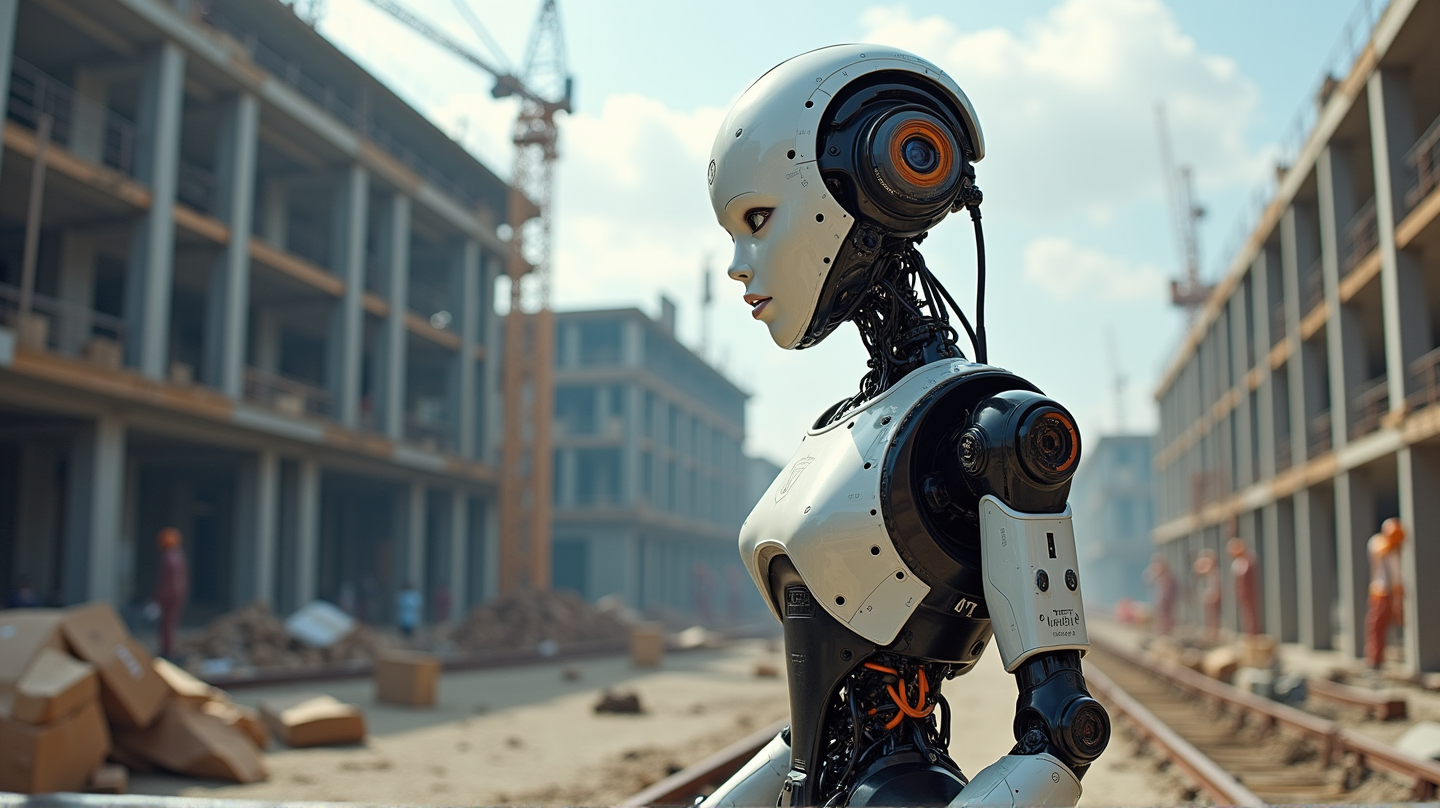
The construction industry stands at the cusp of a technological transformation that promises to reshape its very foundation. Humanoid robots, equipped with advanced AI capabilities, are emerging as potential game-changers in an industry plagued by labor shortages and stagnant productivity. As the demand for construction soars, these robots could provide the innovative edge needed to meet future challenges efficiently.
Rising Challenges in Construction
The construction sector is grappling with dual challenges: escalating demand and a dwindling workforce. A recent McKinsey Global report highlighted these concerns, pointing out that many workers are approaching retirement, and fewer young people are entering the field. Safety concerns, uncertainty about prospects, and the physical demands of the job are deterring new entrants. Against this backdrop, robotics emerges as a bright beacon of hope, offering a sustainable solution.
Embracing Robotics
The drive to integrate robotics into construction processes isn’t novel but has taken on renewed urgency. According to BuiltWorlds’ report, technological advancements in layout, drilling, and material transport are being closely explored. The goal is to harmonize robotics with connected equipment and data-driven decision-making to forge a more responsive and scalable construction environment. Exemplifying this shift, robotic devices are already adept at tasks like brick-laying and drywall installation, showcasing their potential.
The Next Leap: Intelligent Humanoids
A significant limitation of current robotics in construction is their task-specific nature. McKinsey envisions a future where general-purpose robots capable of performing diverse tasks across multiple settings redefine construction procedures. Aarni Heiskanen, a Finnish construction innovation expert, emphasizes the need for robots that can navigate independently, react to changing conditions, and exhibit reasoning capabilities.
Are We Ready for AI-Powered Builders?
The rapid development of AI suggests that intelligent mobile robotics, reminiscent of science fiction, are nearing reality. China’s Noetix Robotics recently introduced “Bumi,” a humanoid robot initially designed for home use but with potential construction applications. Bumi’s capabilities — including image capture, voice command processing, and sensory feedback — offer a glimpse into a promising future for affordable, adaptable robotics in construction.
A Race for Innovation
As the race to perfect humanoid robotics intensifies, China and the U.S. are vying for dominance. Apptronik, a U.S. robotics start-up, has already secured significant funding and aims to match China’s advancements. However, both nations face challenges, with the capital cost of robots needing dramatic reductions to integrate seamlessly into construction budgets.
Preparing for the Future
For robots to truly revolutionize construction, the industry must ramp up digital infrastructure and safety protocols. As stated in constructconnect.com, legal and regulatory frameworks are essential to govern humanoid usage. Despite hurdles, experts advocate for proactive preparation, suggesting an accelerated timeline for deploying these technological marvels.
The construction landscape is on the verge of an exciting transformation, with humanoid robots at the forefront. As they become an integral part of the workforce, these robots could redefine what’s possible in construction, paving the way for safer, more efficient worksites and a brighter future for the industry.