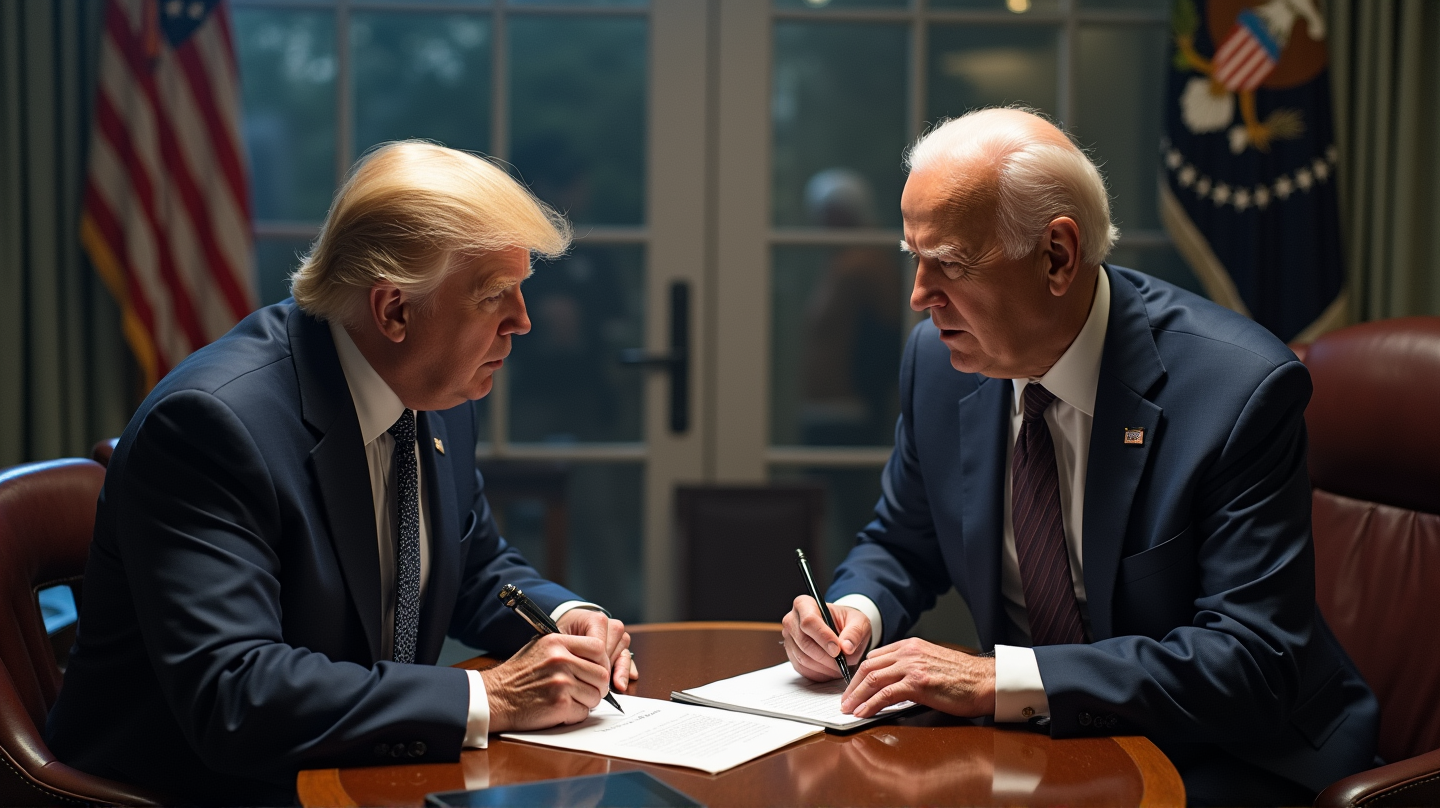
In a remarkable move that has stirred both intrigue and skepticism, former President Donald Trump declared on social media his intention to nullify any executive orders, laws, or pardons signed by President Joe Biden using the autopen. As political tensions bubble and legal controversies simmer, this announcement raises urgent questions about presidential powers and the future of such decisions. According to Juneau Independent, this latest declaration could potentially spark a legal battle, threading the already tight political landscape into a more tangled web.
Unfolding the Controversy: Trump’s Autopen Crusade
Back in March, Trump vented his frustration regarding the use of autopen in pardons, setting off an earlier round of legal skepticism. The experts deemed these challenges as “absurd,” viewing them more as political distractions than substantive claims. Yet, Trump persisted, escalating his crusade in June when he tasked White House legal counsel and the U.S. attorney general to scrutinize the Biden administration’s employment of this mechanical signer.
His social media rhetoric claims that autopen-signed documents carry no legal weight, but he has yet to clarify the legal mechanisms he plans to deploy to substantiate his claims.
Biden Strikes Back: Transparency and Authenticity
President Biden has responded with firm denials of any wrongdoing connected to the use of the autopen. Emphasizing transparency, he reiterated that each act and decision accomplished during his presidency was under his full authority and cognizance. Rebutting Trump’s allegations, Biden and his administration have depicted these investigations as diversions from more pressing national issues, such as legislative efforts that, they argue, threaten essential programs.
The Legal Labyrinth: Can Trump Really Deregulate?
As Trump challenges the legality of Biden’s autopen procedure, a tangled legal labyrinth ensues. Historically, while presidents have reversed their predecessors’ executive orders, altering laws signed with an autopen traditionally necessitates Congressional action. Forebodingly, a unilateral attempt by Trump to nullify such laws could usher in a precedent-setting lawsuit concerning presidential prerogatives.
A Constitutional Quandary: Experts Weigh In
Legal minds, such as Georgetown’s Professor David Super, assert that the U.S. Constitution does not stipulate signatures for presidential powers. A mere verbal assertion suffices for a pardon, underscoring the administrative convenience, rather than constitutional necessity, behind written documentation.
In a climate ripe for controversy, Trump’s grandstanding and Biden’s rebuttal may play out like a political soap opera, yet they are more sobering reflections of the intricate dance of modern governance.
Conclusion: Legal Drama or Formidable Challenge?
While some dismiss Trump’s declarations as theatrical bluster, others remain watchful of its potential ripple effects across the political and legal landscape. As America monitors this unfolding drama, we’re reminded of the complex web imbued in governance, law, and the perpetual play of power dynamics at the nation’s highest levels.