Vivanellion Trading Platform Alternatives 2026: Reliable Options for Online Traders
Volatility has a habit of exposing weak plumbing. When central banks lurch from “higher for longer” to sudden easing (or vice versa), execution quality, margin policy, and the fine print around withdrawals stop being background noise and become the trade. That’s the practical context in which many readers start researching Vivanellion alternatives rather than simply chasing headline leverage or a glossy signup bonus.
Viewed through a journalist’s lens, Vivanellion fits the common offshore CFD profile: a forex-and-CFD-first venue, typically offering a proprietary WebTrader and mobile app, with instrument coverage that leans toward FX pairs, major indices, a handful of commodities, and crypto CFDs. Publicly observable terms in this segment frequently include a minimum deposit around $250, maximum leverage up to 1:500, and EUR/USD pricing that often comes in near 2.0 pips on a standard-style account. The bigger question for most serious traders isn’t whether you can place a trade on Vivanellion; it’s whether the total package—regulatory oversight, client-money protections, and the day-to-day mechanics of fills and funding—matches your risk budget.
Disclaimer: This article is for informational purposes only and does not constitute investment advice. CFDs and other leveraged products carry a high risk of loss, and you can lose more than you expect if you do not manage margin carefully.
Key Takeaways (TL;DR)
- Prefer regulated brokers where you can verify the licence on the FCA, ASIC, CySEC, or NFA registers and understand client-fund segregation and compensation coverage (FSCS/ICF).
- Compare “round-turn” trading cost (spread + commission + expected slippage) rather than leverage headlines; for active FX traders, a 0.5–1.0 pip difference can dominate P&L over a month.
- Plan the move: open and KYC-verify the new account first, export history for tax records, then withdraw using the original funding route to avoid AML delays.
What Is Vivanellion and How Does Its Trading Platform Work?
In practice, Vivanellion looks like a CFD broker aimed at retail traders who want quick access to FX and index CFDs via a browser-based platform. The operating setup is typically closer to a dealing-desk/market-maker model than true DMA, which matters because your fill quality can depend on how the broker manages risk internally during fast markets. The usual product mix in this category is 30–50 forex pairs, roughly 8–15 indices, 5–10 commodities, and 10–30 crypto CFDs—plenty to speculate on macro themes, but not the same as holding underlying assets in a custody account.
Vivanellion Web Trading Platform: Core Features and Tools
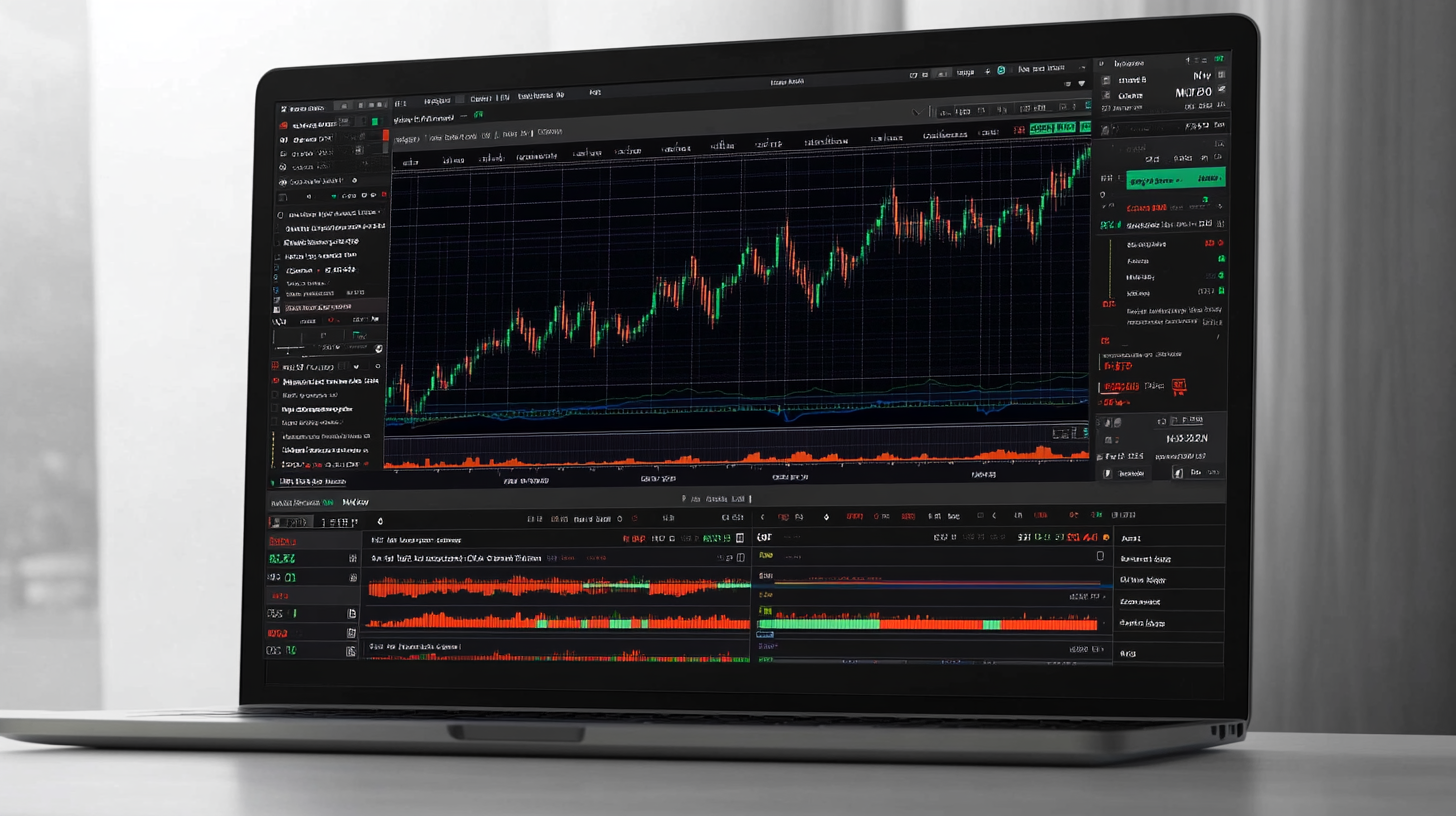
Expect a proprietary WebTrader with basic-to-mid charting rather than a professional workstation. Chart layouts are generally serviceable for discretionary trading—common timeframes, popular indicators, and standard drawing tools—yet power users can hit limits if they rely on advanced order routing, custom indicators, or systematic execution. Order tickets in this segment usually cover market, limit, stop, and stop-limit styles, with watchlists and a simple account dashboard for margin and exposure. Mobile apps for iOS and Android often mirror the core workflow, although the smaller screen can make multi-chart risk monitoring feel cramped during event-driven spikes.
Trading Fees, Spreads, and Account Types at Vivanellion
Cost disclosure for competitors to Vivanellion is often a blend of spreads, possible commissions on “raw” tiers, and financing charges that show up as swap/overnight fees. A reasonable working assumption for comparison is EUR/USD “from ~2.0 pips” on a standard-style account, with leverage commonly marketed up to 1:500 and a minimum deposit near $250. Some brokers in this lane advertise lower headline spreads via a commission model (for example, 0.0–0.4 pips plus roughly $6–$7 round-turn), but the true cost is spread + commission + slippage. Also watch for non-trading costs: withdrawal handling fees and inactivity charges can quietly change the economics for lower-frequency traders.
When Do Traders Start Looking for Vivanellion Alternatives?
Regulation is usually the first domino. Once a trader realises the protections offered by an offshore framework can be thin—particularly around complaints, negative balance protection, and client-money safeguards—the search for Vivanellion alternatives tends to become less about “features” and more about legal and operational resilience. Add in the reality that high leverage amplifies small pricing differences, and platform limitations become more costly in a month where CPI surprises or an unexpected central-bank pivot widens spreads and increases slippage.
- A strategy requires MT4/MT5 or cTrader for Expert Advisors, custom indicators, or more granular order management than a basic WebTrader provides.
- Withdrawals feel inconsistent or slow, especially if the broker pushes you toward alternative payment routes rather than the original deposit method.
- You need transparent oversight (FCA/ASIC/CySEC/NFA) and clear rules on segregated client funds and dispute resolution.
- Your trading plan shifts from short-term CFDs to investing in real stocks/ETFs, where ownership, corporate actions, and custody matter.
How to Choose a Reliable Alternative to the Vivanellion Trading Platform
A sensible way to choose alternatives to the Vivanellion trading platform is to start with risk controls, then work outward to product fit. In other words: confirm the legal wrapper first, evaluate the execution model second, and only then worry about chart colours and marketing claims. If you trade around macro catalysts—jobs reports, rate decisions, geopolitical shocks—your broker’s treatment of margin calls, slippage, and order rejections becomes part of your risk management.
Regulation, Safety, and Investor Protection
Begin with the regulator’s public register: FCA (UK), ASIC (Australia), CySEC (Cyprus/EU), or NFA/CFTC (US). Those regimes typically require segregated client funds and impose conduct standards that offshore brokers often avoid. In the UK, the FSCS can cover eligible client claims up to £85,000; in Cyprus, the ICF is commonly referenced up to €20,000 (eligibility rules apply). The point isn’t bureaucracy—it’s whether there is a credible enforcement and compensation framework if things go wrong.
Available Markets and Instruments
Match instruments to intent. FX and index CFDs suit tactical views on rates, growth, and risk sentiment; long-horizon portfolios often need cash equities and ETFs rather than equity CFDs. Options and futures become relevant if you hedge event risk or want defined payoff structures. For US readers in particular, access and product rules differ sharply—some global CFD offerings simply won’t onboard US residents, while US-registered brokers tend to offer spot FX (via NFA/CFTC) and a deeper listed market stack.
Trading Costs: Spreads, Commissions, and Other Fees
Ignore “from zero” headlines and calculate round-turn cost-of-trade: spread paid on entry/exit plus any commission, then add the real-world friction of slippage in fast markets. Overnight financing (swap) matters if you hold CFDs across multiple sessions, especially when the rate differential moves with central-bank guidance. Finally, check the non-trading line items—deposit/withdrawal costs and inactivity fees can penalise disciplined traders who sit out choppy regimes.
Platforms, Tools, and Execution Quality
Platform choice is a proxy for workflow. MT4/MT5 remain popular for automation and third-party tooling; cTrader is valued for execution transparency and UI; proprietary platforms can be excellent, but you’re betting on one vendor’s ecosystem. Execution model matters: market makers internalise flow; STP/ECN/DMA setups route more directly, though they can still produce slippage during thin liquidity. If you’re comparing platforms like Vivanellion, ask how orders are filled, what happens in a gap, and whether negative balance protection is explicit.
Support, Education, and Overall User Experience
Operational friction is a hidden cost. Look for support hours that match your trading session (London/NY overlap is critical for many), multi-language coverage if needed, and response times that don’t collapse during high-volatility periods. Education should go beyond glossary material into margin policy, risk controls, and platform-specific mechanics. Mobile parity also matters: if you manage risk on the move, you want full position and order controls—not a “view-only” companion.
Vivanellion and Different Asset Classes: When Alternatives May Be Better
Vivanellion Forex and CFD Trading
For FX and index CFDs, the core comparison is execution + cost under stress. A typical offshore setup (think EUR/USD around ~2.0 pips on a standard-style account, leverage marketed up to 1:500, and a finite list of majors/minors) can be workable for occasional trades, but active strategies are sensitive to spread widening and re-quotes when liquidity thins. Pepperstone and IC Markets are often used as benchmarks in the FX/CFD specialist tier because they combine mainstream regulation (entity-dependent) with platform choice (MT4/MT5/cTrader) and pricing that can be materially tighter on raw/commission accounts. The trade-off is that raw accounts demand discipline: commissions, swap, and slippage still apply, and leverage is not a substitute for edge. If your plan relies on stop precision around data releases, the broker’s fill policy is as important as the chart.
Vivanellion Stock and ETF Trading
Equities are where many brokers similar to Vivanellion reveal a structural gap. Equity exposure may be offered only through CFDs—no shareholder rights, no voting, and the economics are shaped by financing rather than dividends and custody. For traders building a macro-aware portfolio (say, balancing US tech duration risk against European cyclicals), access to real stocks and ETFs is often the cleaner solution. Interactive Brokers (IBKR) is difficult to beat on breadth—listed equities, ETFs, options, futures, bonds, and FX—while Saxo Bank also caters to multi-asset investors who want professional-grade tools and research. The key distinction is ownership and market access (DMA in many venues) versus synthetic exposure. CFDs have their place for tactical positioning, but they are a different instrument with different risks.
Vivanellion Crypto Trading
Crypto is frequently presented as “available,” but the wrapper matters. In many CFD-first venues, you’re trading crypto CFDs—price exposure only—rather than holding coins on-chain or in a dedicated custody solution. That can be perfectly adequate for short-term views on risk appetite, yet it introduces financing costs and counterparty considerations, and it doesn’t help if you need transfers or staking. Among regulated options, IG and Plus500 are commonly referenced for crypto CFD access in jurisdictions where it’s permitted, alongside broader CFD coverage in FX and indices. Keep the regulatory perimeter in mind: product availability varies by country, and leverage on crypto (where allowed) can turn routine volatility into forced liquidation. If crypto is central to your plan, insist on clear margin rules and transparent weekend pricing behaviour.
Best Vivanellion Alternatives for 2026: Comparison of Top Trading Platforms
Interactive Brokers (IBKR): Key Facts and How It Compares to Vivanellion
Regulation: SEC/FINRA (US), FCA (UK), IIROC (Canada) (entity-dependent).
Markets: Stocks, ETFs, options, futures, bonds, FX; CFDs in certain regions.
Fees: Generally low explicit commissions for listed markets; FX pricing is typically tight with transparent commission-style schedules (varies by instrument and venue).
Platform: Trader Workstation (TWS), IBKR Desktop/mobile, Client Portal; API access.
Best For: Macro-driven multi-asset investors who want breadth and control.
Pepperstone: Key Facts and How It Compares to Vivanellion
Regulation: FCA, ASIC, CySEC, DFSA (entity-dependent).
Markets: FX and CFDs (indices, commodities, some crypto CFDs where permitted).
Fees: Standard spreads often around ~1.0–1.2 pips on EUR/USD; Raw-style pricing can be ~0.0–0.3 pips plus commission (often ~US$6–$7 round-turn, account-dependent).
Platform: MT4, MT5, cTrader, TradingView (integration availability varies), plus mobile.
Best For: Active FX traders optimising for platform choice and tight pricing.
Saxo Bank: Key Facts and How It Compares to Vivanellion
Regulation: FCA, MAS, DFSA (entity-dependent).
Markets: Stocks, ETFs, bonds, options, futures, FX, and CFDs.
Fees: Pricing varies by tier; FX spreads are typically competitive (often ~0.6–1.2 pips equivalent depending on account), with commissions on many listed products.
Platform: SaxoTraderGO, SaxoTraderPRO.
Best For: Portfolio traders who want a single, institution-style multi-asset hub.
IG: Key Facts and How It Compares to Vivanellion
Regulation: FCA, ASIC, MAS (entity-dependent).
Markets: CFDs on FX, indices, commodities, shares; spread betting in the UK; limited crypto CFDs where permitted.
Fees: Typically spread-based for many CFD markets (EUR/USD often ~0.6–1.0 pips in liquid conditions on main accounts); financing applies on overnight CFD positions.
Platform: IG web platform/mobile; MT4 available in many regions.
Best For: Event-risk traders who value robust risk tools and market coverage.
IC Markets: Key Facts and How It Compares to Vivanellion
Regulation: ASIC, CySEC; FSA Seychelles (group-level, entity-dependent).
Markets: FX and CFDs (indices, commodities, some crypto CFDs where permitted).
Fees: Raw-style accounts often advertise ~0.0–0.2 pips on EUR/USD plus commission (commonly ~US$6–$7 round-turn); standard accounts are typically wider (often ~0.8–1.2 pips).
Platform: MT4, MT5, cTrader.
Best For: Systematic traders running EAs who need low-latency execution options.
Plus500: Key Facts and How It Compares to Vivanellion
Regulation: FCA, CySEC, ASIC, MAS (entity-dependent).
Markets: CFDs across FX, indices, commodities, shares; crypto CFDs where permitted.
Fees: Mostly spread-based; typical EUR/USD spreads are often around ~0.8–1.2 pips in normal conditions, with overnight financing on CFDs.
Platform: Plus500 proprietary WebTrader and mobile apps.
Best For: Simplicity-first traders who prefer a streamlined CFD interface.
Comparison Summary
| Platform | Regulation | Main Markets | Typical Costs | Best For |
|---|---|---|---|---|
| Interactive Brokers (IBKR) | SEC/FINRA, FCA, IIROC | Stocks/ETFs/options/futures/bonds/FX | Low commissions on listed markets; tight FX with transparent schedules | Macro-driven multi-asset investors who want breadth and control |
| Pepperstone | FCA, ASIC, CySEC, DFSA | FX + CFD indices/commodities (crypto CFDs where permitted) | ~1.0–1.2 pips Standard; ~0.0–0.3 pips + ~US$6–$7 RT on Raw | Active FX traders optimising for platform choice and tight pricing |
| Saxo Bank | FCA, MAS, DFSA | Multi-asset: stocks/ETFs/options/futures/FX + CFDs | Competitive FX (~0.6–1.2 pips eq. by tier); commissions on many exchanges | Portfolio traders who want a single, institution-style multi-asset hub |
| IG | FCA, ASIC, MAS | CFDs across FX/indices/commodities/shares; spread betting (UK) | Often ~0.6–1.0 pips EUR/USD; financing on overnight CFDs | Event-risk traders who value robust risk tools and market coverage |
| IC Markets | ASIC, CySEC (plus Seychelles entity in group) | FX + CFDs (indices/commodities; crypto CFDs where permitted) | ~0.0–0.2 pips + ~US$6–$7 RT Raw; ~0.8–1.2 pips Standard | Systematic traders running EAs who need low-latency execution options |
| Plus500 | FCA, CySEC, ASIC, MAS | CFDs on FX/indices/commodities/shares (crypto CFDs where permitted) | Spread-based; often ~0.8–1.2 pips EUR/USD + overnight financing | Simplicity-first traders who prefer a streamlined CFD interface |
How to Safely Move from Vivanellion to Another Broker
Switching brokers is less like changing a charting app and more like rewiring counterparty exposure. Treat the sequence as a controlled process: reduce operational risk first, then re-establish market risk in the new venue. If you rush—especially with leveraged CFDs—you can end up trapped between margin requirements and withdrawal timelines. Where you’re coming from matters too: moving away from Vivanellion may involve extra scrutiny on funding routes and identity checks.
- Verify the new broker’s authorisation on the regulator’s register (FCA Register, ASIC Connect, CySEC register, or NFA BASIC) and confirm the exact legal entity you will be onboarded to.
- Open the new account and complete KYC/AML checks (photo ID and proof of address) before you initiate any closures; verification can be quick, but delays do happen.
- Flatten exposure on the old account by closing open positions rather than assuming positions can be “moved across”; in most retail setups, you’ll need to re-enter trades on the new platform.
- Request withdrawals using the same method used for deposits wherever possible; many providers will insist on this for AML reasons, and deviations can slow processing.
- Download statements, trade confirmations, and funding history for your records and tax reporting before access changes or the account is marked inactive.
Ready to Explore Vivanellion?
If you’re still assessing your options, compare onboarding requirements, platform tooling, and region eligibility side-by-side before committing fresh capital. Even small differences in margin policy, swap rates, and execution can matter in 2026’s macro backdrop.
FAQ: Vivanellion Alternatives and Trading Platforms
What is the best alternative to Vivanellion in 2026?
The best alternative depends on whether you need multi-asset investing or pure FX/CFD execution. For broad market access (stocks, ETFs, options, futures), Interactive Brokers and Saxo Bank are hard to ignore; for FX-specialist workflows, Pepperstone or IC Markets are common reference points due to MT4/MT5/cTrader support and sharper raw pricing. If your preference is a simplified CFD interface, Plus500 or IG can be a cleaner fit, subject to local product rules.
Is Vivanellion a safe broker/platform?
Vivanellion appears to operate under an offshore/unregulated-style framework, commonly associated with the Seychelles FSA category rather than top-tier bodies such as the FCA or NFA. That doesn’t automatically mean misconduct, but it does mean fewer formal protections than you’d expect under UK/EU/US oversight (for example, clearer compensation pathways and stricter conduct rules). If safety is your priority, focus your shortlist on regulated options and verify entity details on the regulator’s register before you fund an account.
Can I trade stocks, futures, or crypto with Vivanellion?
With Vivanellion, the practical expectation is forex and CFDs as the core offering, with crypto typically provided as crypto CFDs (price exposure, not coin ownership). Real stocks/ETFs and listed futures are often not part of the standard offshore CFD toolkit, or they may be offered only as CFDs on shares. If you need cash equities or exchange-traded futures, Interactive Brokers or Saxo Bank are more appropriate substitutes for Vivanellion in that specific use case.
What should I check before switching from Vivanellion to another platform?
Before switching, confirm the new broker’s regulator and legal entity, then review margin rules, negative balance protection, and the execution model (market maker vs STP/ECN/DMA). Next, compare round-turn costs (spread + commission) and the swap/overnight schedule for instruments you actually trade. Finally, export your history and plan withdrawals carefully—especially if you’re moving funds out of Vivanellion—because AML rules can dictate the payment route and timing.
About the Author: James Sterling is a London-based market strategist with two decades of experience covering central bank policy, macro risk, and the market microstructure issues that decide real-world trading outcomes. He holds an MSc in Economics from the London School of Economics and writes with a focus on verifiable regulation, cost-of-trade, and risk controls rather than marketing narratives.