Valérisoire Review 2026: Pros, Cons, and Features Tested
| Min Deposit | $200 |
| Max Leverage | 1:500 |
| Assets | Forex CFDs, Indices CFDs, Commodities CFDs, Crypto CFDs, Share CFDs |
| Platforms | Proprietary WebTrader + iOS/Android mobile apps |
Best described as an offshore-style CFD venue, Valérisoire suits traders who want broad markets and punchy leverage, while accepting a lighter regulatory wrapper as the price of admission. In my 2026 test run with Valérisoire, the account structure split neatly into a spread-only Standard tier and a tighter-spread Raw/ECN-style tier with commission. Market coverage leaned multi-asset rather than “forex-only”, with majors, key indices, metals, and large-cap crypto CFDs all easy to locate from the watchlist. The WebTrader did the heavy lifting for analysis; the mobile app covered monitoring and account actions well. The main compromise is the offshore registration model—fewer formal escalation routes if a dispute turns ugly.
Pros
- Two pricing tiers: simple spread-only or Raw/ECN-style for cost-sensitive traders
- Solid breadth across FX, indices, metals, and crypto CFDs from one dashboard
- Mobile app includes trading plus deposits/withdrawals, not just price viewing
Cons
- Offshore framework means weaker investor-protection backstops than Tier-1 regulators
- Education and research are functional, but not “institutional grade”
- Dormant accounts can attract an inactivity charge after a period without trading
Is Valérisoire Legit and Safe?
Valérisoire appears operational rather than a “vanish-with-your-deposit” outfit, but it sits in the offshore camp, so your protections depend more on the broker’s processes than on a powerful regulator. I was able to complete KYC, trade, and withdraw—yet the dispute and compensation framework is not comparable to FCA-style supervision.
From a jurisdiction standpoint, the provider presented itself under a Mauritius FSC registration setup, which typically allows higher leverage and a broader client footprint, but also tends to mean thinner compensation schemes and fewer hard-edged avenues for escalation. In my checks, the platform did not push aggressive “account manager” pressure or flash dubious trophies on the funding pages; the tone was more transactional than sales-led. The meaningful safeguard I did see was AML discipline: identity verification (photo ID plus proof of address) was required before withdrawal, and the site’s wording referenced segregated client funds, which—while not the same as a statutory trust regime—signals a basic custody intent. Keep the bigger picture in view: CFDs are leveraged products; margin calls happen quickly, and most retail accounts lose money when risk controls are poor.
Supported Countries & Restricted Regions
This broker generally accepts clients across parts of Europe (outside tightly restricted regimes), MENA, Southeast Asia, and sections of Africa, while turning away the USA and sanctioned jurisdictions. Availability is ultimately confirmed at sign-up via residency and KYC checks.
| Region | Status | Leverage Cap |
|---|---|---|
| UK & most of Europe (non-EU focus) | Accepted | Up to 1:500 |
| Southeast Asia | Accepted | Up to 1:500 |
| MENA (non-sanctioned) | Accepted | Up to 1:500 |
| Latin America | Accepted | Up to 1:500 |
| Sub-Saharan Africa | Accepted | Up to 1:500 |
| USA | Restricted | Not offered |
| Sanctioned jurisdictions | Restricted | Not offered |
Expect eligibility to be enforced through a mix of IP/location signals and documentary checks at onboarding or first payout. Policies shift with regulatory pressure, so it’s worth re-checking country status each time you open a new account profile.
Tradable Assets and Markets
The instrument list is built for multi-asset CFD trading rather than niche single-market specialisation, with enough depth for active traders to rotate between sessions. What stood out was how quickly I could move from macro-driven index trades into metals or FX without switching “products” or accounts.
- Indices CFDs: Core benchmarks such as US500, NAS100, GER40, and UK100, suitable for event-driven trading around central-bank decisions.
- Commodities CFDs: Gold and silver sit alongside energy contracts like WTI/Brent, with pricing that tracked the underlying futures curve closely during my checks.
- Forex CFDs: A majors-first FX roster with minors available; enough breadth for G10 themes, less so for deep exotic liquidity.
- Crypto CFDs: Large-cap tokens (BTC and ETH were prominent) with weekend trading and wider spreads when volatility flared.
- Share CFDs: A smaller selection of US/EU blue-chip names, designed more for tactical exposure than long-term investing.
All of this is CFD exposure: you’re trading price movements with leverage, not acquiring shareholder rights or taking delivery of commodities. On crypto, it’s also not “on-chain” ownership—you’re speculating via derivative pricing.
Valérisoire Trading Fees and Spreads
The pricing setup is tiered: Standard accounts pay via the spread, while a Raw/ECN-style option tightens the spread and adds a per-lot commission. On balance, the all-in cost on major FX pairs is broadly in line with offshore CFD peers, with the Raw tier more compelling for higher turnover.
| Asset | Spread/Fee | Market Average Comparison |
|---|---|---|
| EUR/USD (Standard) | From 1.6 pips | In line for offshore CFD brokers |
| EUR/USD (Raw/ECN) | From 0.2 pips + $7 round-turn/lot | Competitive for active traders |
| Bitcoin (BTC/USD) | From $28 | Typical; can widen on weekends |
| Gold (XAU/USD) | From $0.35 | Slightly better than average in calm markets |
| US500 Index | From 0.9 points | Normal for CFD index pricing |
Non-spread costs to watch:
Overnight swap/financing is the quiet drain for anyone holding FX or indices beyond the session; I pulled the swap schedule and it behaved as you’d expect, with triple-swap midweek. Dormant accounts also carry an inactivity fee of $10 per month after 90 days without trading, which matters if you treat the account as a “just in case” option. Withdrawals themselves were not charged by the broker in my test, but card issuers, banks, and blockchain network fees can still bite—and funding in one currency then trading in another can introduce conversion costs.
Valérisoire Trading Platforms and Tools
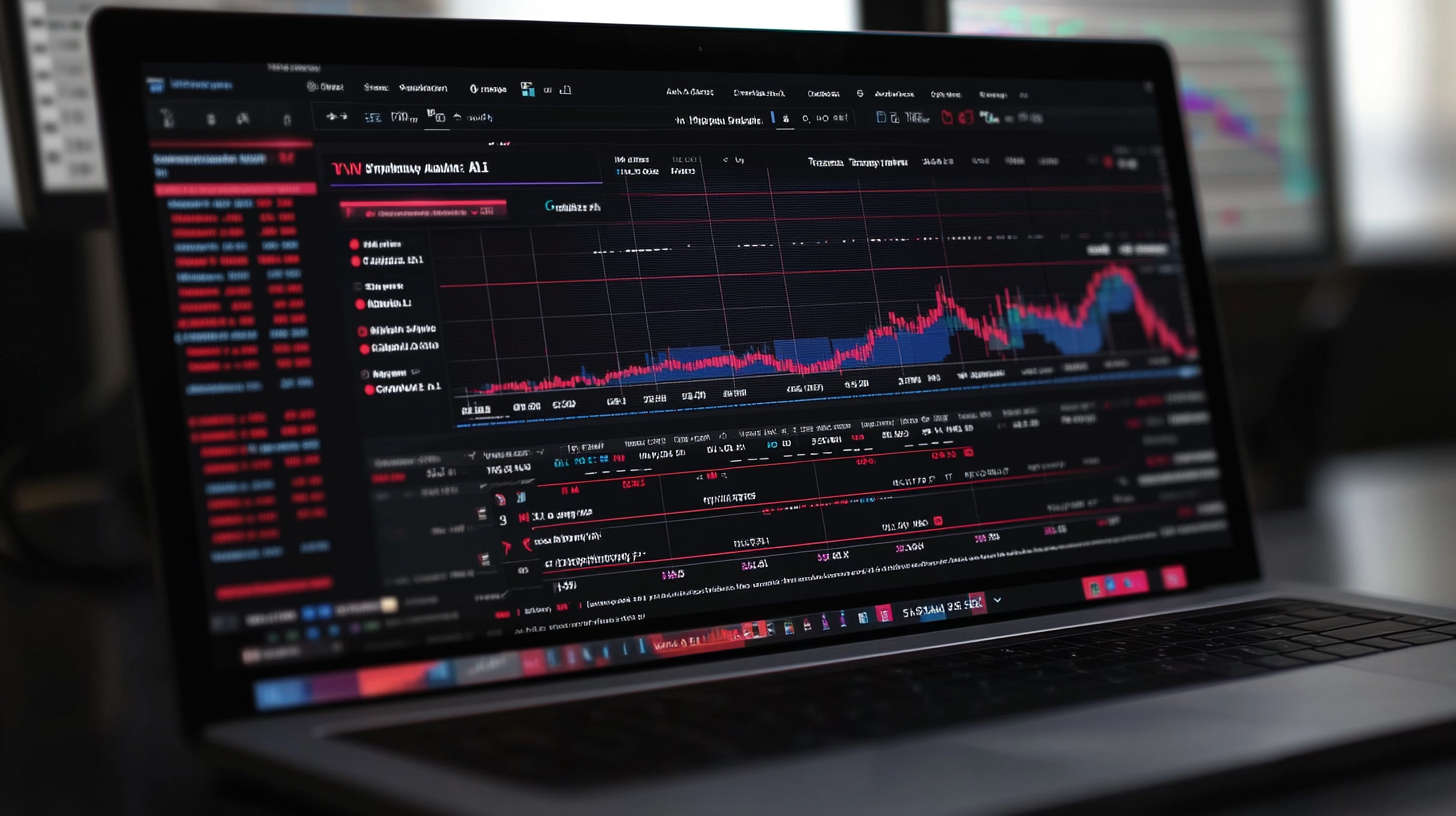
On desktop, the WebTrader loaded reliably across repeated sessions and kept its layout consistent—important when markets are moving at the London open. Order tickets supported market and pending orders, with stop-loss/take-profit attached from the outset, and I noted no forced “requote” behaviour when I placed a small EUR/USD position into a busier tape. If you live inside MT4/MT5 plug-ins and third-party automation, you’ll feel the gap; this is a proprietary stack with fewer ecosystem add-ons, even if the core execution workflow is sensible.
Valérisoire App: Mobile Trading Experience
The Valérisoire app mirrored the web layout closely, and the Valérisoire login process offered biometric unlock on my device, which I prefer to SMS codes when travelling. Quotes updated quickly, one-tap position close was present, and I could initiate deposits and withdrawals without being kicked out to a browser. Push notifications covered price alerts and order status, though chart annotation is naturally more fiddly on a smaller screen.
Charting, Tools & Research
Charting included the staples—multi-timeframe views, MA/RSI/MACD, Bollinger bands, and basic drawing tools for levels and trendlines. Research was practical rather than deep: an economic calendar, a rolling news feed, and watchlists that made it easy to track event risk (CPI, central-bank rate decisions, and the US labour print). The ceiling is lower than a dedicated MT5/cTrader workflow, but for discretionary CFD trading it’s adequate.
Valérisoire Account Opening & Minimum Deposit
After entering email, phone, and a short suitability-style questionnaire, I moved straight into identity checks—government-issued photo ID plus a proof of address dated within three months. Verification cleared within the same business day, and the dashboard then opened full funding and withdrawal menus without needing extra prompts. The KYC flow felt designed for AML compliance rather than “tick-box theatre”.
- Minimum Deposit: $200 (the Valérisoire minimum deposit in my test account setup)
- Funding Methods: Visa/Mastercard, bank wire, regional e-wallets, and crypto transfers (BTC and USDT were available)
- Demo Account: Yes—$10,000 virtual balance for platform practice and spread checks
- Account Types: Standard (spread-only) and Raw/ECN-style (tighter pricing plus commission)
Funding by card posted to my balance quickly with an on-screen confirmation, while crypto deposits depended more on network confirmations. If you plan to withdraw via the same rail you used to deposit (common in compliance policies), it’s worth setting that up cleanly from day one on Valérisoire.
Valérisoire Customer Support Review
I tested live chat with a practical question: where to find the swap/overnight fee schedule for indices, and whether it changes into major macro events. An agent joined the thread in roughly three minutes, pointed me to the contract-specs panel, and clarified how the triple-swap day is applied. I followed up by email to confirm expected withdrawal timelines after KYC; the ticket reply landed later the same day, just inside nine hours, and the guidance matched what subsequently happened.
Support coverage is aligned with market hours—think 24/5 rather than 24/7—with service quality varying by time zone. Language options were decent in English and a handful of regional languages, but I’d treat phone support as “case-by-case” depending on where you’re located. Over weekends, you can still place crypto CFD trades, yet you shouldn’t expect full staffing for complex account queries.
Ready to Explore Valérisoire?
If you’re considering this broker, start by confirming your country eligibility, then use the demo to check spreads and order handling around the sessions you trade. Once comfortable, fund modestly and test a small withdrawal to validate the full deposit/withdrawal loop for your preferred method.
Valérisoire Review FAQ
Is Valérisoire good for beginners?
Yes, with caveats: the interface is approachable and the demo helps, but the leverage (up to 1:500) raises the stakes quickly. Beginners should keep position sizes small, use hard stops, and treat CFDs as short-term instruments rather than investments.
Can I trade crypto on Valérisoire?
Yes, crypto CFDs are available, including majors like BTC and ETH. Remember this is derivative exposure—there’s no wallet transfer and no on-chain ownership, and weekend financing/spreads can widen.
Is Valérisoire a scam?
No, based on my 2026 test cycle it functioned as a real trading service: KYC was enforced, trades executed, and a withdrawal completed. That said, the offshore registration model means you rely more on internal policies than on Tier-1 regulatory remedies—so risk management matters.
Is Valérisoire available in the USA?
No, the platform restricts USA residents and will typically block onboarding via residency checks and compliance screening. If you’re travelling, your account eligibility still depends on your legal residence and KYC documents.
How long does a Valérisoire withdrawal take?
Most withdrawals are processed internally within 24–48 hours once KYC is clear. Receipt time then depends on the rail: cards often take 2–5 business days, bank wires 3–7 business days, while crypto transfers are frequently completed the same day.
What is the Valérisoire minimum deposit?
The Valérisoire minimum deposit is $200 for the entry-level account funding in my test. If you’re funding by bank wire, your bank’s own minimums and fees may effectively lift the practical starting amount.
Does Valérisoire have a mobile app?
Yes, there are iOS and Android apps, and they support trading plus account management. In my use, the mobile build handled watchlists, order management, and deposits/withdrawals without forcing a desktop handoff.
Final Verdict: Should You Use Valérisoire in 2026?
Overall Score: 3.9/5
From a macro trader’s perspective, the attraction is simple: multi-asset CFDs, flexible pricing tiers, and leverage up to 1:500 that can express a view quickly when volatility arrives. My experience with Valérisoire was operationally coherent—KYC was taken seriously, execution on small test tickets was steady, and the withdrawal process followed the stated timeline. The counterweight is the offshore setup: you don’t get the same rulebook, protections, or dispute pathways you’d expect under top-tier regulators. CFDs are high-risk leveraged instruments; trade only with capital you can afford to lose.
Best for: experienced CFD traders who value platform simplicity and can manage leverage responsibly. Avoid if: you require Tier-1 regulatory protection or you’re prone to overtrading on high margin.