Qarfina AI Review 2026: Pros, Cons, and Features Tested
| Min Deposit | $200 |
| Max Leverage | 1:500 |
| Assets | Forex, indices, commodities, crypto CFDs, share CFDs |
| Platforms | Proprietary WebTrader + iOS/Android mobile apps |
Built as a multi-asset CFD venue with a tilt toward faster, higher-leverage trading, Qarfina AI suits traders who value flexibility over the heavier protections of a top-tier jurisdiction. In my 2026 check, the account structure split neatly into a spread-only Standard tier and a tighter-spread Raw/ECN-style option aimed at active flow. Coverage leaned practical—majors and key indices, plus crypto CFDs for out-of-hours volatility—while the stack stayed proprietary via WebTrader and mobile. The selling point is range: leverage up to 1:500 with a familiar toolkit (charts, indicators, watchlists). The headline compromise is the offshore framework, which can complicate dispute escalation and investor safeguards. For the platform overview, see Qarfina AI.
Pros
- Two pricing tiers let you choose between spread-only simplicity and commission-based tighter pricing
- Broad CFD menu across FX, indices, metals, and crypto for cross-market positioning
- Mobile and WebTrader experience feels coherent, with quick access to funding and order management
Cons
- Offshore registration means fewer formal investor-compensation routes than FCA/ASIC-style regimes
- Education and research are functional rather than deep, especially for macro-driven traders
- Dormant accounts incur an inactivity charge, which can nibble at small balances
Is Qarfina AI Legit and Safe?
Qarfina AI appears operational rather than a “vanish overnight” outfit, and I was able to fund, trade, and withdraw in a normal workflow. That said, it operates in an offshore registration model, so the safety net is not equivalent to a Tier‑1 regulated broker.
What carried most weight in my checks was process discipline: identity verification was enforced before withdrawal, and the platform’s legal pages repeatedly referenced segregated client funds (language, not a guarantee—still worth noting). The registration footprint I encountered pointed to the Seychelles FSA, which typically allows higher leverage and faster product rollouts but offers weaker statutory recourse if a dispute turns adversarial. I also ran a basic red-flag scan: no fabricated “trophy cabinet” of improbable awards, no pressure-call barrage after my deposit, and pricing looked consistent with what you’d expect for an international CFD provider. Still, offshore status can mean thinner compensation schemes, fewer escalation channels, and a higher burden on the client to manage leverage and margin. CFDs are leveraged products; losses can exceed expectations quickly, and most retail traders lose money.
Supported Countries & Restricted Regions
This broker broadly accepts clients across parts of Europe (outside tightly restricted regimes), MENA, and segments of Asia and Africa, subject to local rules. The USA and sanctioned jurisdictions are not onboarded.
| Region | Status | Leverage Cap |
|---|---|---|
| UK & EEA | Restricted | Not offered |
| Non‑EU Europe (e.g., Switzerland, Balkans) | Accepted | Up to 1:500 |
| MENA (selected countries) | Accepted | Up to 1:500 |
| Southeast Asia (selected countries) | Accepted | Up to 1:500 |
| Sub‑Saharan Africa (selected countries) | Accepted | Up to 1:500 |
| USA | Restricted | Not offered |
| Sanctioned jurisdictions | Restricted | Not offered |
In practice, eligibility is enforced through a mix of sign-up declarations, IP/location checks, and KYC documentation. Country availability can shift with compliance policy, so confirm access before depositing—especially if you travel frequently or hold dual residency.
Tradable Assets and Markets
Rather than chasing every niche contract, the platform focuses on the instruments most CFD traders actually rotate through—FX for liquidity, indices for macro expression, and crypto CFDs for weekend risk. The list felt designed for tactical positioning around data prints and central-bank headlines.
- Indices: The core set included US500 and NAS100 alongside GER40 and UK100, useful for expressing risk-on/risk-off without single-stock noise.
- Forex: Roughly 40+ pairs across majors and a handful of higher-volatility crosses; execution and spreads were most competitive on the liquid majors.
- Commodities: XAU/USD and XAG/USD were front and centre, with crude benchmarks also available for inflation and geopolitics-themed trades.
- Crypto CFDs: BTC/USD and ETH/USD were present, with pricing that remained tradeable outside traditional market hours (financing costs matter here).
- Share CFDs: A smaller, curated list of large-cap names—adequate for opportunistic hedges, not a full equity dealing replacement.
All of the above are CFDs, meaning you’re trading price exposure rather than owning the underlying asset. You don’t receive shareholder voting rights, and crypto positions are not on-chain holdings; dividends, where applicable, are handled via broker adjustments.
Qarfina AI Trading Fees and Spreads
Pricing is split between a Standard account that embeds costs in the spread and a Raw/ECN-style tier that pairs tighter spreads with a per-lot commission. On my test ticket sizes, the all-in cost sat broadly in line with offshore CFD peers—competitive on liquid FX, less remarkable on crypto.
| Asset | Spread/Fee | Market Average Comparison |
|---|---|---|
| EUR/USD (Standard) | From 1.6 pips | In line for international CFD accounts |
| EUR/USD (Raw/ECN) | From 0.2 pips + $7 round-turn/lot | Competitive if you trade size/frequency |
| Bitcoin (BTC/USD) | From $35 | About average; varies with volatility |
| Gold (XAU/USD) | From $0.25 | Slightly better than many entry-tier brokers |
| US500 Index | From 0.8 points | Typical for CFD index pricing |
Non-spread costs to watch: Overnight swap/financing is the quiet driver of long-run results, particularly if you hold indices or metals through multiple sessions; I pulled the swap figures from the contract specs before leaving positions open. Crypto CFDs also carried noticeable weekend financing, which can compound if you’re treating them like spot. Dormancy isn’t free either—after 90 days inactive, the account attracted a $10 monthly inactivity fee. Withdrawal fees looked method-dependent (the card rail was clean in my test), while FX conversion costs can appear if you fund in one currency and your account is denominated in another.
Qarfina AI Trading Platforms and Tools
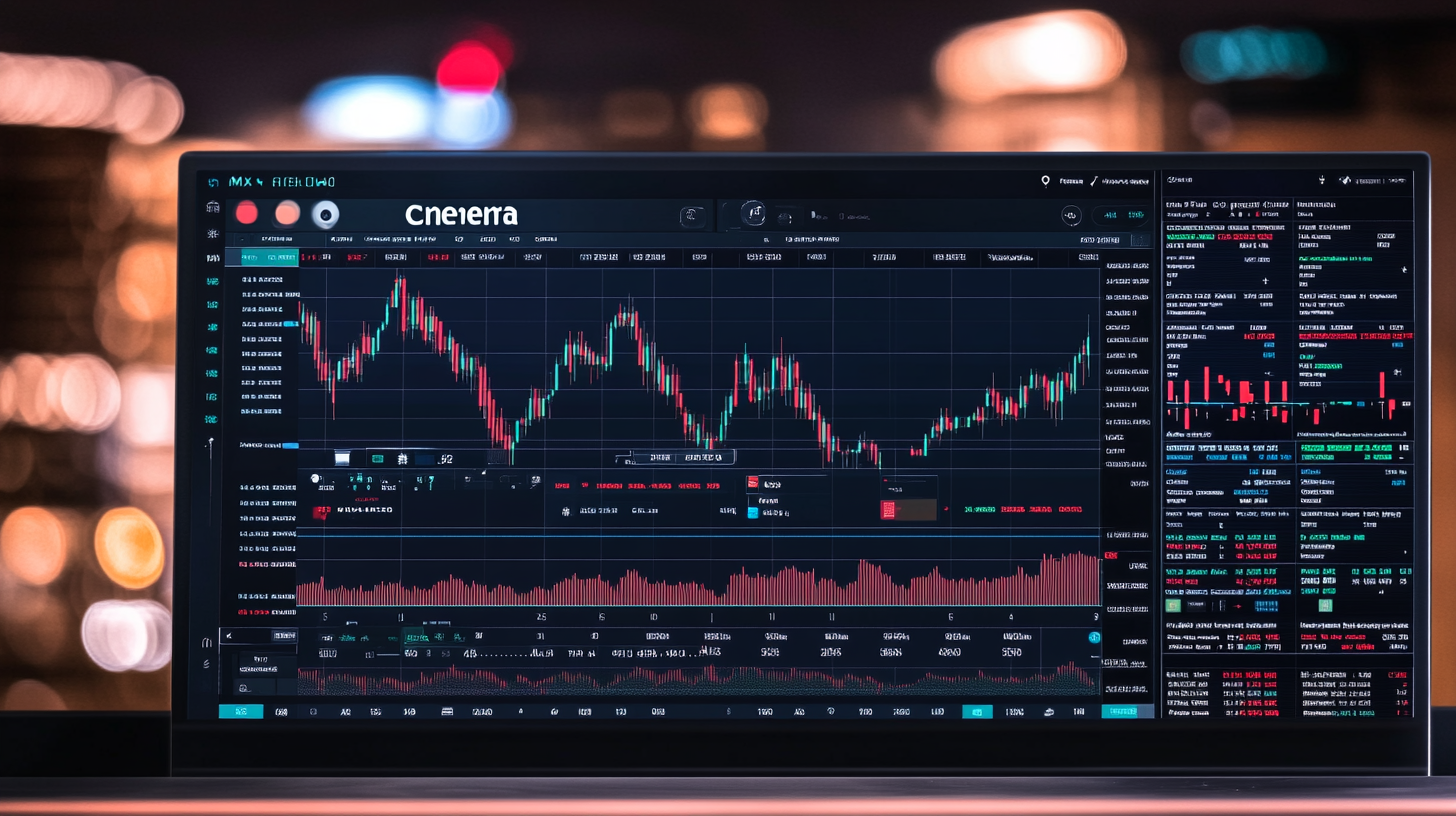
From a London desk perspective, the WebTrader mattered most during the 8–10am burst when European liquidity firms up and spreads tighten. Login stability held up across repeated sessions, and order tickets supported market, limit, and stop orders with visible margin impact before confirmation. Execution on a small EUR/USD clip during the New York overlap printed without a requote; slippage was modest and directionally consistent with the market tape. MT4/MT5 weren’t presented as confirmed options in my workspace, so traders reliant on third-party EAs or deep plugin ecosystems may feel the constraint.
Qarfina AI App: Mobile Trading Experience
The Qarfina AI app mirrors the WebTrader layout closely, which reduces the “where is that button?” tax when you move from desktop to mobile. On my handset, biometric sign-in worked reliably, and the Qarfina AI login flow stayed stable even when switching between Wi‑Fi and mobile data. You can manage deposits and withdrawals from the app, set price alerts, and use one-tap close to flatten exposure quickly—useful when headlines hit. The main quirk: dense charts on smaller screens can feel cramped when multiple indicators are layered.
Charting, Tools & Research
Tooling is serviceable for discretionary traders: multi-timeframe charts, the standard indicator set (RSI, MACD, moving averages, Bollinger bands), and basic drawing tools. An economic calendar and an integrated news feed help with event risk, though the research depth won’t rival a dedicated institutional terminal or a mature MT5/cTrader ecosystem. Watchlists and alerts are the practical highlights; they’re the difference between planned risk-taking and reactive trading.
Qarfina AI Account Opening & Minimum Deposit
My sign-up started with the usual details—email, phone, country, and a short appropriateness questionnaire—then moved quickly into AML/KYC prompts. Verification required a government-issued photo ID plus a proof of address dated within three months; I used a bank statement and received approval the same business day. Funding was available immediately after approval, and the dashboard displayed margin, free equity, and open exposure clearly once the account went live.
- Minimum Deposit: $200
- Funding Methods: Visa/Mastercard, bank wire, regional e-wallets, and cryptocurrencies such as BTC and USDT
- Demo Account: $10,000 virtual balance for testing spreads, order types, and risk controls
- Account Types: Standard (spread-only) and Raw/ECN-style (tighter spreads + $7 round-turn commission per lot)
For anyone searching “Qarfina AI minimum deposit”, the practical answer is that $200 gets you through the front door—yet meaningful risk management still depends on position sizing and leverage discipline. Account base currency choices were straightforward, and KYC was enforced before my withdrawal request, not after an extended back-and-forth. If you want to compare the account tiers on the registration screen, open the pricing panel at Qarfina AI.
Qarfina AI Customer Support Review
I tested support with two questions that matter in real trading: how swaps are calculated on XAU/USD and what the internal timeline is for card withdrawals once KYC is complete. Live chat replied in roughly three minutes, pointing me to the contract-specs page and clarifying the daily financing cut-off. I then sent an email asking for confirmation of the minimum withdrawal and received a coherent reply in about eight hours, including method-specific timing expectations.
Coverage is broadly aligned with the CFD market’s rhythm: 24/5 availability fits FX and index sessions, while weekend responsiveness is lighter (relevant if you trade crypto CFDs). Language support is region-dependent, and phone help wasn’t positioned as a universal channel. Against peers in the offshore space, the helpdesk felt more “process-led” than sales-led, which is the right bias.
Ready to Explore Qarfina AI?
If you’re considering an offshore CFD venue, start by checking the live spread screen around the London open and verifying your funding/withdrawal rails from your own region. A demo first is sensible, then a small deposit to confirm execution and support quality before scaling.
Qarfina AI Review FAQ
Is Qarfina AI good for beginners?
It can be, provided you treat leverage with respect and keep position sizes small. The interface is not overly complex, and the demo account helps you learn order types without risking cash. Beginners should avoid using the 1:500 leverage cap until they have consistent risk controls.
Can I trade crypto on Qarfina AI?
Yes, crypto CFDs such as BTC/USD and ETH/USD are available. You’re trading price exposure via CFDs rather than buying coins on-chain, so financing charges (including weekend rates) become part of the cost equation. For shorter-term strategies, watch volatility and margin closely.
Is Qarfina AI a scam?
No—based on my 2026 test it functioned as a real, tradeable platform with standard KYC and a processed withdrawal. The bigger issue is not “scam vs not”, but that it sits in an offshore framework (Seychelles FSA), where legal protections and dispute paths are thinner than in Tier‑1 regimes. Approach it as a higher-risk, higher-leverage CFD venue, not a bank.
Is Qarfina AI available in the USA?
No, it is not offered to US residents. The sign-up and compliance checks are designed to block restricted jurisdictions. If you have US tax residency or a US address, expect onboarding to fail at KYC.
How long does a Qarfina AI withdrawal take?
Card withdrawals typically land in 2–5 business days after approval, with internal processing commonly taking 24–48 hours once KYC is complete. Bank wires can take longer (often 3–7 business days) depending on correspondent banks. Crypto withdrawals, where supported, are often much faster, sometimes within the same day.
What is the Qarfina AI minimum deposit?
The Qarfina AI minimum deposit is $200. That amount is enough to test execution, spreads, and the withdrawal process, but it doesn’t remove the need for disciplined risk limits—especially with leverage available up to 1:500. If you’re new, consider using the demo before funding.
Does Qarfina AI have a mobile app?
Yes, iOS and Android apps are provided alongside the WebTrader. The mobile build supports order placement, position management, alerts, and account funding/withdrawal functions. It’s a practical companion for monitoring exposure away from the desk.
Final Verdict: Should You Use Qarfina AI in 2026?
Overall Score: 4.0/5
Leverage and pricing flexibility are the two reasons traders will keep looking at Qarfina AI in 2026, especially if they prefer a proprietary interface over the MT4/MT5 universe. My experience—depositing by card, trading liquid FX during the London/US overlap, and withdrawing after KYC—was orderly, with no obvious operational nasties. Still, the offshore registration model means you’re relying more on the broker’s processes than on a deep regulatory backstop. If you proceed, treat CFDs as high-risk instruments: keep margin conservative and assume volatility can overwhelm stop-losses. For the latest terms, start here: Qarfina AI.
Best for: active CFD traders who want Standard vs Raw/ECN pricing choice and can manage leverage responsibly. Avoid if: you require Tier‑1 regulation, US access, or a full MT4/MT5 automation ecosystem.