Patrivonne Trading Platform Alternatives 2026: Reliable Options for Online Traders
Risk has a habit of arriving from the edges: a surprise central-bank pivot, a weekend gap, or a broker relationship that turns out to be thinner than it looked on day one. That’s why many active traders are reassessing where they place margin and who actually sits on the other side of the trade. Patrivonne presents as an offshore-style CFD venue: a proprietary WebTrader, a mobile app, forex and index/commodity CFDs at the core, and the sort of headline leverage (often up to 1:500) that can look attractive right up until volatility spikes. In this segment, minimum deposits commonly cluster around $250, and EUR/USD dealing costs tend to land near “from ~2.0 pips” on a standard-style setup—fine for occasional trading, less forgiving for frequent execution.
For a US/EU audience, the practical questions are less about glossy features and more about protections: segregated client funds, negative balance safeguards, the recourse you have when disputes arise, and whether the firm is answerable to a credible regulator. Those concerns—and not just “better charts”—are what usually drive the search for Patrivonne alternatives. If you trade around macro events (CPI, payrolls, rate decisions), execution quality and slippage policies matter as much as spreads. If you invest as well as trade, the difference between owning real equities versus trading stock CFDs is not semantics; it’s rights, custody, and tax handling.
Disclaimer: This article is for informational purposes only and does not constitute investment advice. CFDs and other leveraged products carry a high risk of loss, and you can lose more than you deposit in some jurisdictions and account structures.
Key Takeaways (TL;DR)
- Offshore-style CFD platforms may offer high leverage (e.g., up to 1:500), but investor protections and dispute resolution are typically weaker than under FCA/ASIC/CySEC/NFA supervision.
- Compare round-turn trading cost (spread + commission + slippage), not leverage headlines—especially if you trade frequently around macro releases.
- If you want real stocks/ETFs, prioritise multi-asset brokers (e.g., IBKR, Saxo) rather than CFD-only setups.
- Migrate methodically: open and verify the new account first, document history, then withdraw using the original funding method to reduce AML friction.
What Is Patrivonne and How Does Its Trading Platform Work?
In practice, Patrivonne looks like a CFD-first broker aimed at retail traders seeking straightforward access to forex, indices, commodities, and often crypto CFDs. Public-facing offshore brokers of this type commonly operate under a light-touch or offshore framework—here, it’s most consistent to treat the setup as Seychelles FSA-style rather than a top-tier onshore licence. That matters because the rules around marketing, leverage caps, complaints handling, and capital requirements tend to diverge sharply from what US and core European regulators demand. For traders evaluating brokers similar to Patrivonne, the key is understanding what you’re buying: an execution venue plus a promise of withdrawal processing, rather than a full-service multi-asset custody offering.
Patrivonne Web Trading Platform: Core Features and Tools
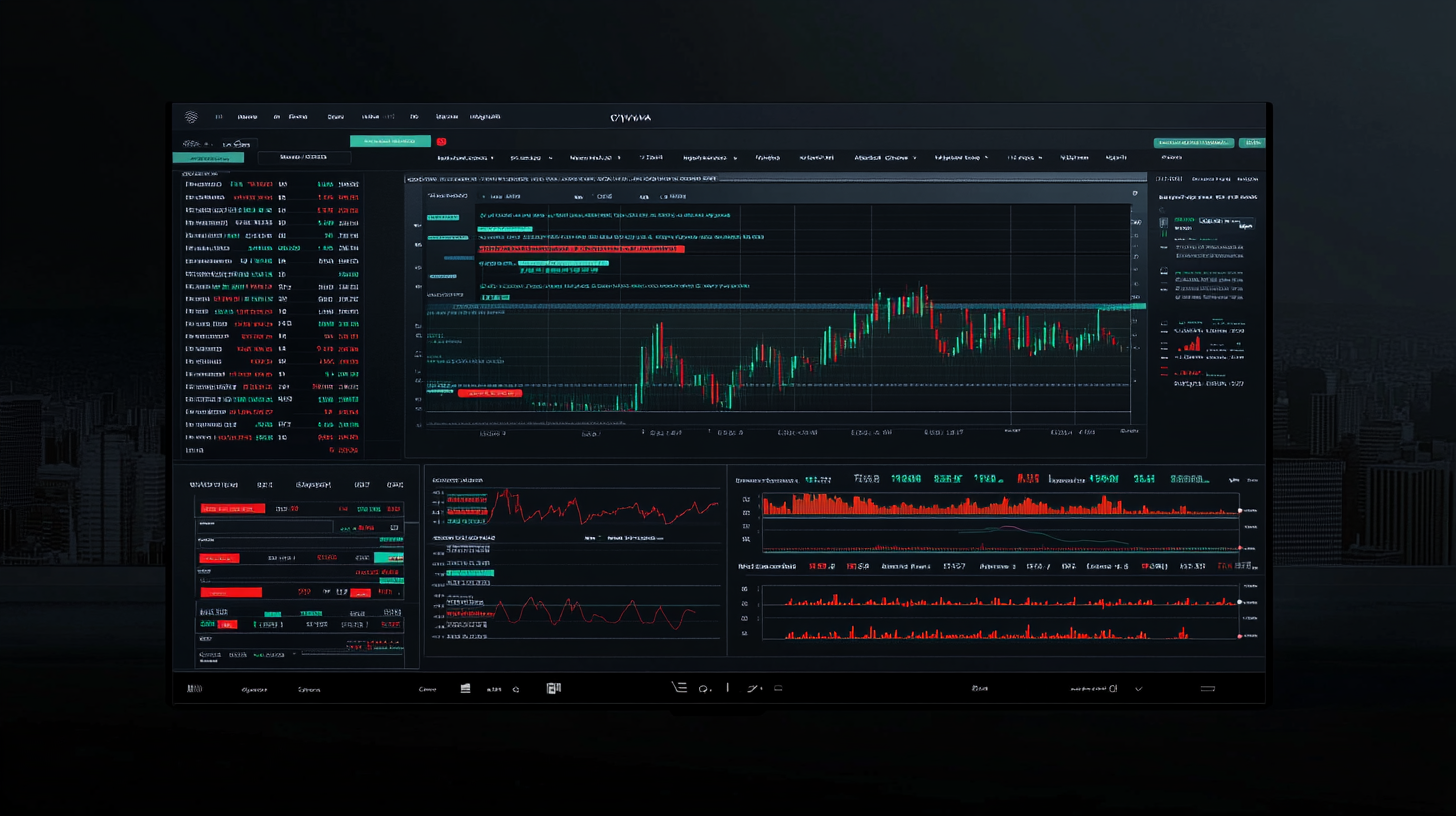
The platform stack is typically built around a proprietary WebTrader with basic-to-mid charting functionality and a companion iOS/Android app. Expect the usual toolkit—timeframes, common indicators, drawing tools, and market/limit/stop orders—alongside an account dashboard for deposits, withdrawals, and position monitoring. Where these platforms often show their limits is depth: fewer conditional order types than MT4/MT5 or cTrader, less transparency on execution quality, and a less flexible workspace for multi-monitor trading. Mobile parity is usually decent for monitoring and quick execution, but discretionary traders who annotate charts heavily may find the web interface restrictive during fast markets.
Trading Fees, Spreads, and Account Types at Patrivonne
Cost-wise, the “standard” experience for competitors to Patrivonne is normally spread-led pricing, with EUR/USD frequently quoted around “from ~2.0 pips” under calm conditions. Some brokers in this bracket advertise a raw/ECN-style tier (think ~0.0–0.4 pips plus a $5–$8 round-turn commission), but the real comparison is the all-in cost after slippage around news. Overnight financing (swap) applies to leveraged CFD positions held past the cut-off, and it can quietly dominate P&L for longer holds. Traders should also look for non-trading charges—withdrawal handling fees and inactivity policies are common pinch points.
When Do Traders Start Looking for Patrivonne Alternatives?
Leverage is the seduction; friction is the catalyst. I find most clients begin hunting for Patrivonne alternatives after a couple of high-volatility sessions reveal what the platform can’t do—partial fills, stop execution that feels “loose”, or funding/withdrawal processes that become slow precisely when risk appetite shifts. The other driver is strategic: as your trading matures, you tend to need better tooling (MT4/MT5, cTrader, APIs), clearer oversight, and access to more than CFDs—particularly if you’re building a portfolio alongside short-term trading.
- You want FCA/ASIC/CySEC/NFA-style oversight, segregated client funds expectations, and clearer complaints handling than an offshore setup can typically offer.
- Your approach relies on automation (EAs) or advanced order management that a proprietary WebTrader doesn’t support consistently.
- Frequent trading makes a ~2.0 pip EUR/USD starting spread feel expensive once you add slippage and swap—especially around rate decisions.
- You need real equities/ETFs (not stock CFDs) for long-term allocation, voting rights, or straightforward custody and reporting.
How to Choose a Reliable Alternative to the Patrivonne Trading Platform
Selection works best when you start from your strategy and your risk budget, not from promotional features. Define what must not fail—withdrawals, execution rules, platform uptime—and then decide what would be “nice to have”, such as social features or exotic instruments. For alternatives to the Patrivonne trading platform, treat regulation, product access, and cost of execution as the three pillars; everything else is secondary.
Regulation, Safety, and Investor Protection
In the UK, the FCA regime matters because it sets conduct rules and links to the FSCS (up to £85,000 for eligible clients if a firm fails). In the EU, CySEC oversight can bring the ICF (up to €20,000, eligibility dependent), while Australia’s ASIC framework is widely respected for its supervisory approach. US traders face a different map entirely—NFA/CFTC rules for retail FX and strong restrictions on CFDs. Wherever you land, confirm the licence on the regulator’s public register, and look for language on segregated client funds and negative balance protection.
Available Markets and Instruments
Start by distinguishing trading exposure from ownership. If your plan includes building a core portfolio, you may need real stocks and ETFs (and possibly bonds or options), which pushes you toward multi-asset venues. If you’re predominantly macro-driven—FX, indices, commodities—an FX/CFD specialist can be perfectly rational, provided execution and risk controls are robust. Crypto is its own category: many “platforms like Patrivonne” offer only crypto CFDs, which behaves differently from on-chain holdings and has no wallet custody.
Trading Costs: Spreads, Commissions, and Other Fees
Costs should be compared as round-turn, all-in trading expense: spread + commission + the slippage you realistically experience at your trade size. A raw account with 0.1–0.3 pips plus commission can beat a wider spread account, but only if execution quality holds up. Swap/overnight financing is often the silent killer for swing positions in CFDs, so read the financing schedule before you lean into carry trades. Also check deposit/withdrawal charges and inactivity rules—small frictions compound into meaningful drag.
Platforms, Tools, and Execution Quality
Platform choice is ultimately about control. MT4/MT5 remains common for EAs and third-party tooling; cTrader is popular with discretionary traders who value depth-of-market and cleaner execution displays; proprietary platforms can be slick, but you’re locked into that ecosystem. Execution model matters too: market-maker pricing can be fine when disclosures are clear, while STP/ECN/DMA routing may better suit high-frequency styles. If you’re moving off Patrivonne, insist on transparent order handling language—especially around re-quotes, slippage, and stop execution in fast markets.
Support, Education, and Overall User Experience
Support is not a “soft” feature when money is in transit. Check hours across US/EU time zones, contact channels, and whether the broker can handle account queries without bouncing you between departments. Education can be valuable, but prioritise operational competence: clear margin call policy, straightforward KYC/AML, and a stable mobile app that mirrors key risk functions (position sizing, stop edits, margin monitoring). For global traders, multilingual support and precise documentation reduce operational risk.
Patrivonne and Different Asset Classes: When Alternatives May Be Better
Patrivonne Forex and CFD Trading
For the typical offshore CFD setup, Patrivonne-style forex access usually means roughly 30–50 pairs, leverage that can run as high as 1:500, and pricing that often starts around ~2.0 pips on EUR/USD on a standard configuration. That mix suits small accounts and directional trading, but it can penalise active execution: on a 50-lot monthly scalping volume, an extra 0.8–1.5 pips versus a raw-spread account becomes a material cost line. Pepperstone and IC Markets are often used by traders who care about the mechanics—raw pricing options, MT4/MT5/cTrader availability, and an execution stack designed for higher turnover. The point isn’t that tighter spreads guarantee better outcomes; it’s that, over time, predictable transaction costs make risk management more honest.
Patrivonne Stock and ETF Trading
If you’re trying to express a macro view through sector ETFs or hold equities through a rate cycle, the main limitation with many offshore CFD platforms is that “stocks” are frequently offered only as CFDs—no shareholder rights, no direct market access, and sometimes thinner product breadth. That’s where top substitutes for Patrivonne look very different: Interactive Brokers (IBKR) is built around multi-venue access to real stocks, ETFs, options, futures, and bonds, with professional-grade reporting. Saxo Bank takes a similar multi-asset approach, appealing to traders who want portfolio tools alongside leveraged products. For many EU/UK users, this is the practical dividing line: trading equity direction for a week is one thing; holding real assets through a drawdown is another.
Patrivonne Crypto Trading
Crypto exposure on brokers similar to Patrivonne is commonly delivered via crypto CFDs—price exposure without owning the underlying coins and without on-chain transfer. That can be appropriate for hedging or short-term trading, but it’s not a substitute for custody in a wallet if your objective is long-term holding. Among regulated options vs Patrivonne, IG and Plus500 are notable for offering crypto CFDs in various jurisdictions (availability and product scope depend on region and regulatory rules). Keep an eye on financing: leveraged crypto CFDs can carry meaningful overnight costs, and weekend gaps can be unforgiving. If crypto is central to your plan, be explicit about whether you need CFDs for trading or actual coin ownership elsewhere for investment.
Best Patrivonne Alternatives for 2026: Comparison of Top Trading Platforms
Interactive Brokers (IBKR): Key Facts and How It Compares to Patrivonne
Regulation: SEC/FINRA (US), FCA (UK), IIROC (Canada)
Markets: Stocks, ETFs, options, futures, bonds, FX
Fees: FX pricing varies by venue/plan; commissions apply on many products; overall costs tend to be sharp for active, larger accounts
Platform: Trader Workstation (TWS), IBKR Mobile, Client Portal, APIs
Best For: Macro traders who also want real multi-asset investing
Pepperstone: Key Facts and How It Compares to Patrivonne
Regulation: FCA (UK), ASIC (Australia), CySEC (EU), DFSA (UAE)
Markets: FX, CFDs (indices, commodities, some shares depending on entity)
Fees: Standard spreads commonly around ~1.0+ pip on EUR/USD; Raw-style pricing can be ~0.0–0.3 pips plus commission
Platform: MT4, MT5, cTrader, TradingView (where available)
Best For: Cost-sensitive FX traders running automation
Saxo Bank: Key Facts and How It Compares to Patrivonne
Regulation: FCA (UK), MAS (Singapore), DFSA (UAE)
Markets: Stocks, ETFs, options, futures, bonds, FX, CFDs
Fees: Pricing varies by tier; spreads on FX can be competitive on higher tiers; commissions apply on exchange-traded products
Platform: SaxoTraderGO, SaxoTraderPRO
Best For: Portfolio-oriented traders needing strong reporting and risk tools
OANDA: Key Facts and How It Compares to Patrivonne
Regulation: CFTC/NFA (US), FCA (UK), ASIC (Australia), IIROC (Canada)
Markets: FX (core), CFDs in some regions (indices/commodities depending on entity)
Fees: Spread-led pricing; EUR/USD often around ~0.6–1.2 pips in liquid hours (varies by region and account)
Platform: OANDA web/mobile, MT4 (availability varies)
Best For: US-eligible FX traders prioritising regulatory clarity
IG: Key Facts and How It Compares to Patrivonne
Regulation: FCA (UK), ASIC (Australia), MAS (Singapore)
Markets: CFDs (FX, indices, commodities, shares), spread betting (UK/IE), limited crypto CFDs where permitted
Fees: Spread-led pricing; major FX pairs can be competitive in liquid hours; financing applies on leveraged positions
Platform: IG platform/web, mobile apps, MT4 (in selected regions)
Best For: Event-driven index and FX trading with broad market coverage
Trading 212: Key Facts and How It Compares to Patrivonne
Regulation: FCA (UK), CySEC (EU)
Markets: Stocks and ETFs (investment accounts), CFDs (where available and permitted)
Fees: Costs depend on product; investing is typically low-friction; CFD trading includes spreads and overnight financing
Platform: Proprietary web and mobile platform
Best For: Beginners building ETFs alongside occasional CFDs
Comparison Summary
| Platform | Regulation | Main Markets | Typical Costs | Best For |
|---|---|---|---|---|
| Interactive Brokers (IBKR) | SEC/FINRA, FCA, IIROC | Real stocks/ETFs, options, futures, bonds, FX | Commissions on many products; competitive for active/larger accounts | Macro traders who also want real multi-asset investing |
| Pepperstone | FCA, ASIC, CySEC, DFSA | FX and CFDs | Std ~1.0+ pip; Raw ~0.0–0.3 pips + commission | Cost-sensitive FX traders running automation |
| Saxo Bank | FCA, MAS, DFSA | Stocks/ETFs, options/futures, FX, CFDs | Tiered pricing; spreads/commissions vary by product | Portfolio-oriented traders needing strong reporting and risk tools |
| OANDA | CFTC/NFA, FCA, ASIC, IIROC | FX (plus CFDs in some regions) | Spread-led; EUR/USD often ~0.6–1.2 pips in liquid hours | US-eligible FX traders prioritising regulatory clarity |
| IG | FCA, ASIC, MAS | CFDs across FX/indices/commodities/shares | Spread-led; financing on leveraged positions | Event-driven index and FX trading with broad market coverage |
| Trading 212 | FCA, CySEC | Stocks/ETFs (real), plus CFDs (where offered) | Investing low-friction; CFDs priced via spreads + overnight fees | Beginners building ETFs alongside occasional CFDs |
How to Safely Move from Patrivonne to Another Broker
Switching brokers is not a “click and go” exercise; it’s operational risk management. Treat it the way you’d treat reducing exposure ahead of a major central-bank week: sequence the actions, keep records, and don’t assume anything transfers cleanly between venues. Because CFDs are leveraged, a sloppy migration—open positions left unmanaged, or rushed funding—can create losses unrelated to your market view. If you’re moving from Patrivonne, plan for a clean break rather than a half-move.
- Confirm the new broker’s authorisation on the relevant public register (FCA Register, ASIC Connect, CySEC register, or NFA BASIC) and match the legal entity name to the account-opening documents.
- Open the new account and complete KYC/AML checks first (ID plus proof of address). In many cases, verification completes within a business day, but don’t leave it to the last minute.
- Flatten risk on the old account before moving funds: close open CFD positions and cancel resting orders so you don’t get caught by a margin call during the transfer window.
- Withdraw using the same method you used to deposit wherever possible. Many payment rails enforce anti-money-laundering consistency, and deviations can slow processing.
- Export statements and trade history for taxes and performance analytics, including financing charges and fees—these are easy to overlook and hard to reconstruct later.
Ready to Explore Patrivonne?
If you’re still assessing whether Patrivonne is a fit, review the onboarding terms, eligible regions, and product list with a cool head—and compare the platform stack against the regulated competitors above. Pay particular attention to execution disclosures, financing rates, and withdrawal processes before committing meaningful capital.
FAQ: Patrivonne Alternatives and Trading Platforms
What is the best alternative to Patrivonne in 2026?
The best alternative depends on whether you need real multi-asset access or primarily trade FX/CFDs. For real stocks/ETFs alongside FX, Interactive Brokers (IBKR) and Saxo Bank are strong Patrivonne alternatives; for FX execution and platform choice (MT4/MT5/cTrader), Pepperstone is often a better fit. If you want a US-regulated route for retail FX, OANDA is a practical benchmark.
Is Patrivonne a safe broker/platform?
Patrivonne appears to sit closer to an offshore/unregulated framework (commonly associated with Seychelles FSA-style entities) than to FCA/ASIC/CySEC/NFA supervision, which reduces formal investor protections. That doesn’t automatically mean a trader will have a bad experience, but it does change your risk profile—especially around complaints handling, leverage rules, and safeguards such as compensation schemes. For many US/EU traders, regulated options vs Patrivonne provide clearer recourse if things go wrong.
Can I trade stocks, futures, or crypto with Patrivonne?
Patrivonne-style platforms typically focus on forex and CFDs; stock/ETF access is often limited to CFDs rather than real exchange-traded ownership, and exchange-traded futures are usually not offered in the way a multi-asset broker provides. Crypto exposure is commonly available as crypto CFDs, which tracks price but does not give on-chain ownership or wallet transfer. If you need real equities or futures, competitors to Patrivonne such as IBKR or Saxo are better aligned.
What should I check before switching from Patrivonne to another platform?
Before switching, verify the new broker’s legal entity on the regulator’s register (FCA/ASIC/CySEC/NFA) and read the execution and slippage policy in plain language. Next, confirm whether you’re trading CFDs or owning the underlying asset, then compare round-turn costs including swap/overnight fees. Finally, test withdrawals and platform workflow with a small deposit before moving the bulk of capital—operational risk is real, and leverage magnifies mistakes.
About the Author: James Sterling is a London-based strategist with 20 years’ market experience, focusing on central bank policy, cross-asset risk, and the plumbing that sits behind price moves. An LSE graduate with an MSc in Economics, he writes from the standpoint of a practitioner: execution, regulation, and risk controls matter as much as the trade idea.